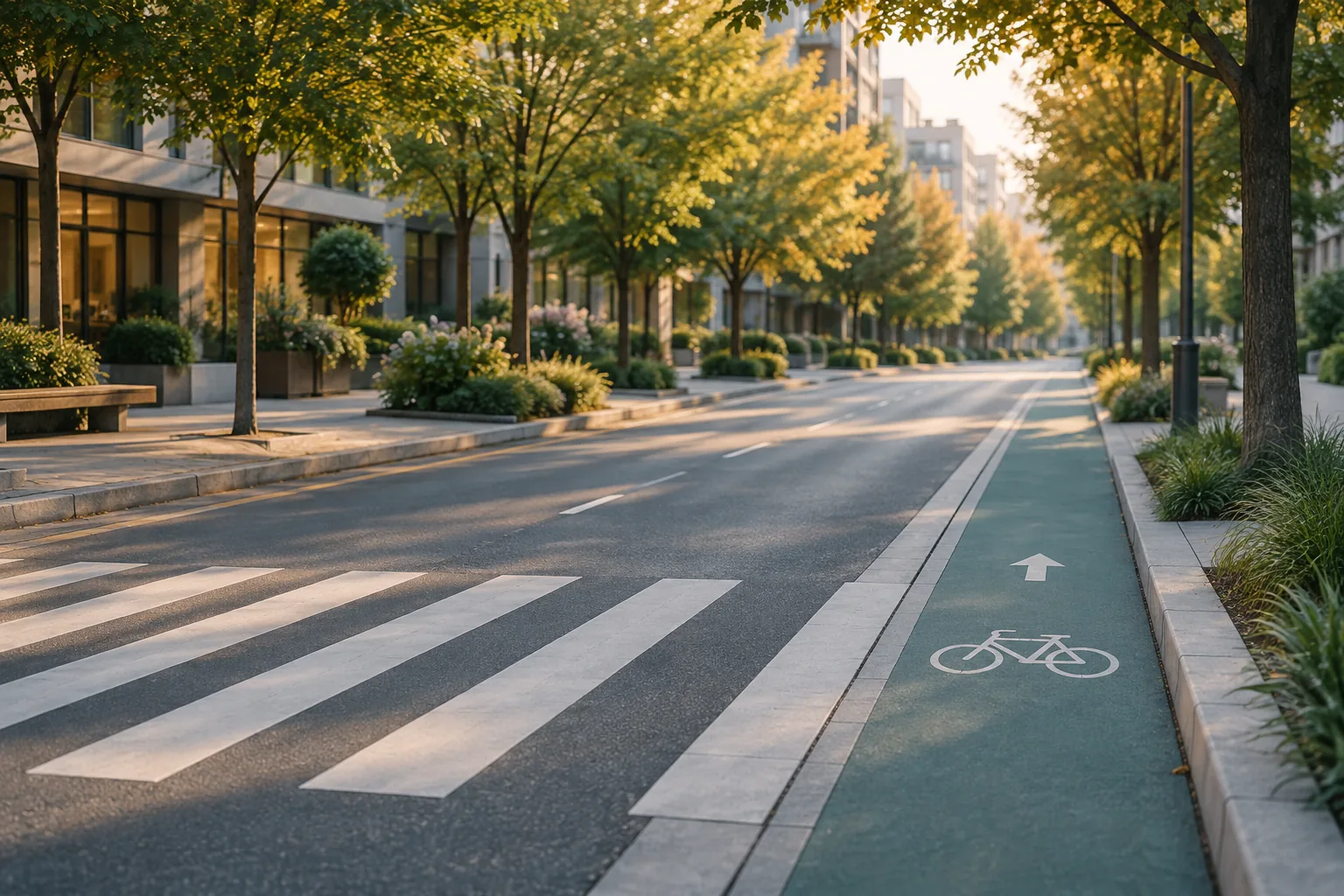
NJ Pedestrians and Bicycles
A pedestrian steps off the curb at a marked crosswalk in front of you in New Jersey. There is no signal at this intersection. What must you do?
- Honk to alert the pedestrian that you have right of way
- Continue through if you arrived at the intersection first
- Yield the right of way and stop until the pedestrian has cleared your half of the road ✓
- Stop only if the pedestrian is in your exact lane
The answer explained
New Jersey treats every intersection as having a crosswalk whether or not the lines are painted. When a pedestrian is in the crosswalk on your half of the roadway, or close enough to your half to be in danger, you must stop and remain stopped until they have safely cleared. You may not pass a vehicle stopped for a pedestrian at a crosswalk because the stopped vehicle is screening the pedestrian from your view.
Why this rule exists
Pedestrians are the most vulnerable users of the road. They have no airbags, crumple zones, or seat belts. The yielding rule exists because the cost of a single mistake is borne entirely by the pedestrian.
The most common mistake
Drivers expect pedestrians to make eye contact before crossing. Many people, especially children, the elderly, and people using mobile devices, do not. Yield based on the pedestrian's presence, not their attention.
New Jersey specific note
New Jersey requires probationary plate decals for new teen drivers under 21. For this question in particular, the New Jersey Motor Vehicle Commission aligns with the standard interpretation explained above. Always verify against the most recent New Jersey driver handbook before relying on these details for the live exam.
Study tip
If the test mentions a pedestrian in or about to enter a crosswalk, yield is almost always the correct answer.