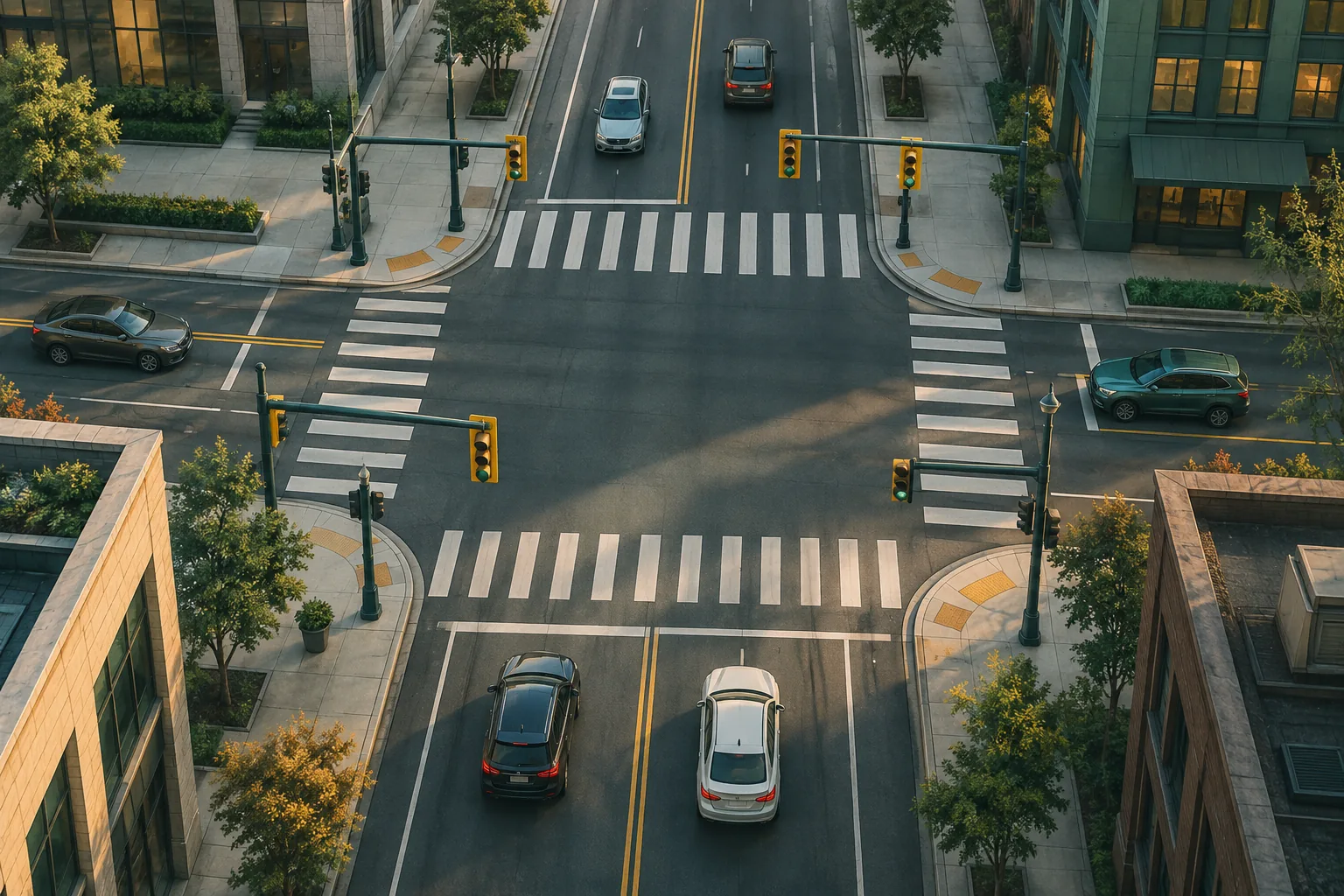
SD Intersections
You are stopped at a green left turn arrow in South Dakota. The arrow turns to a steady green ball. What does the new signal mean?
- Continue your protected left turn at any time
- You may still turn left but must yield to oncoming traffic and pedestrians ✓
- Left turns are now prohibited and you must go straight
- Stop and wait for the next protected arrow
The answer explained
A green arrow is a protected turn. Oncoming traffic is stopped. When the signal changes to a steady green ball, the protection is gone. You may still turn left in South Dakota, but you must yield to oncoming traffic that has the same green ball and to any pedestrians lawfully in the crosswalk. Move into the intersection, keep your wheels straight while waiting, and complete the turn when a safe gap appears.
Why this rule exists
Left turns across opposing traffic are the highest risk routine maneuver a driver makes. Treating the green ball as if it were still protected is a leading cause of front to side crashes at signalized intersections.
The most common mistake
Drivers turn their wheels left while waiting in the intersection. If they are rear ended their car is pushed into oncoming traffic. Keep wheels straight until the moment you actually turn.
South Dakota specific note
South Dakota allows learner permits at age 14 and tests on prairie wildlife collisions. For this question in particular, the South Dakota Driver Licensing Program aligns with the standard interpretation explained above. Always verify against the most recent South Dakota driver handbook before relying on these details for the live exam.
Study tip
Arrow means protected, ball means permitted. Permitted always requires yielding before you turn.