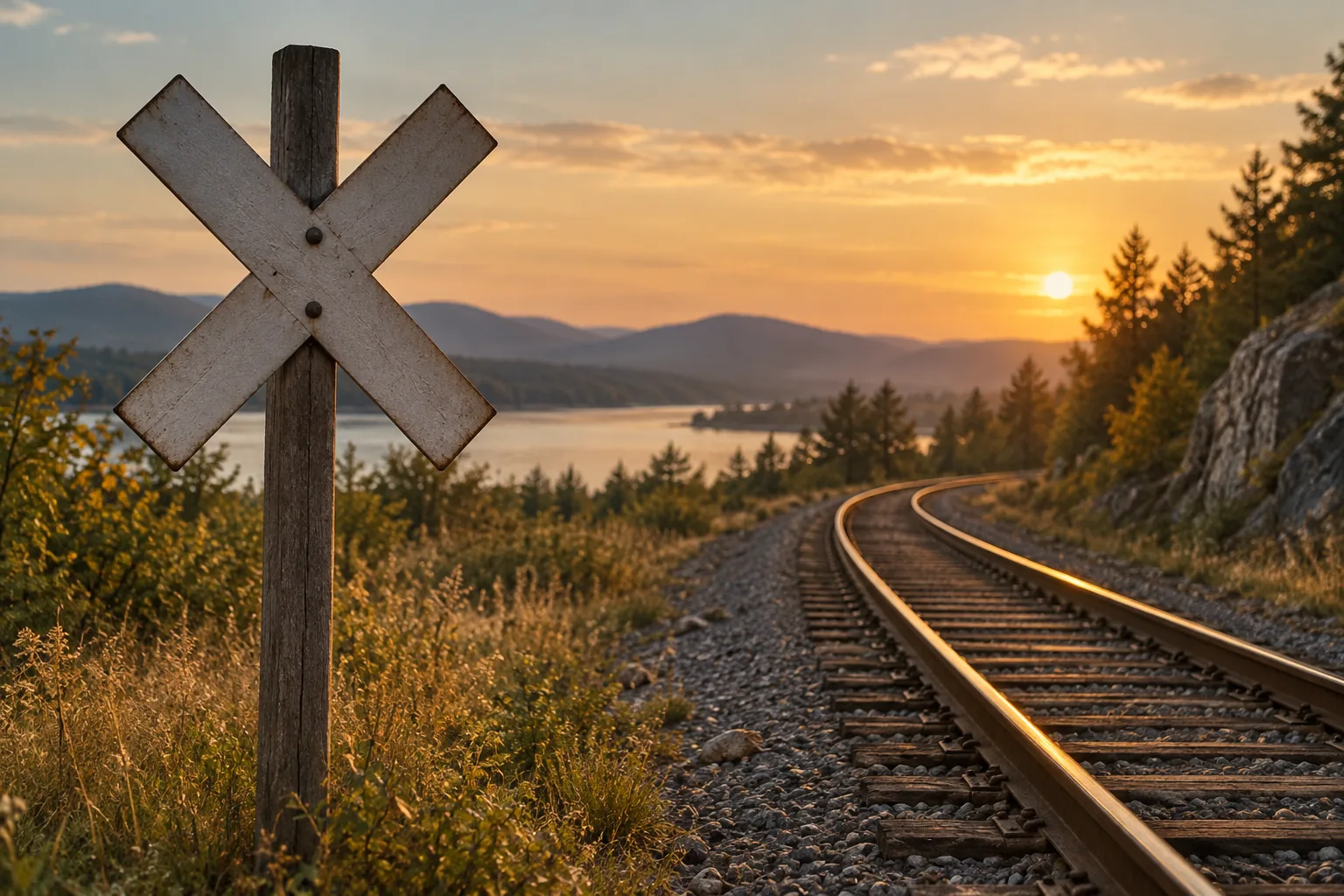
OR Railroad Crossings
You approach a passive railroad crossing in Oregon that has a crossbuck sign but no flashing lights or gates. What are you required to do?
- Continue without slowing because there are no active warnings
- Slow down, look and listen in both directions, and yield to any approaching train ✓
- Always come to a complete stop regardless of conditions
- Sound your horn before crossing
The answer explained
A crossbuck is the X shaped sign at most railroad crossings and functions like a yield sign. In Oregon you must slow as you approach, look both ways, listen for horns or bells, and yield to any train near enough to be a hazard. School buses and certain commercial vehicles must always stop. Never start across unless you can completely clear the tracks without stopping on them.
Why this rule exists
Trains take more than a mile to stop and weigh thousands of times more than a passenger vehicle. The crossbuck is passive because federal cost benefit analysis does not justify gates at every crossing, but the duty to yield is identical.
The most common mistake
Drivers misjudge train speed because the size of the locomotive makes it appear to be moving slower than it actually is. If you can see the train at all, assume it is closer and faster than it looks.
Oregon specific note
Oregon and New Jersey are the only two states where attendants must pump gas at most stations. For this question in particular, the Oregon Driver and Motor Vehicle Services aligns with the standard interpretation explained above. Always verify against the most recent Oregon driver handbook before relying on these details for the live exam.
Study tip
Crossbuck means yield. Flashing lights or lowered gates mean stop. School buses and tankers always stop regardless of warning type.